Scope creep starts in the proposal: writing one that protects the project
Every “small extra” a client asks for mid-project was already possible on the day you sent the proposal. The document just failed to say no in advance. This is how to structure a proposal so the boundaries are agreed before the work begins.

The phrase “scope creep” makes it sound like something that happens to you, slowly, from outside. Most of the time it is not creep at all. It is a proposal that was vague about what was included, and a client who reasonably assumed the thing they wanted was in there.
The fix is not a tougher contract clause. A clause only helps after the relationship has already soured enough for someone to go and read it. The fix is a proposal that describes the work so precisely that both sides can tell, at a glance, whether a new request is inside or outside it.
Describe deliverables, not activities
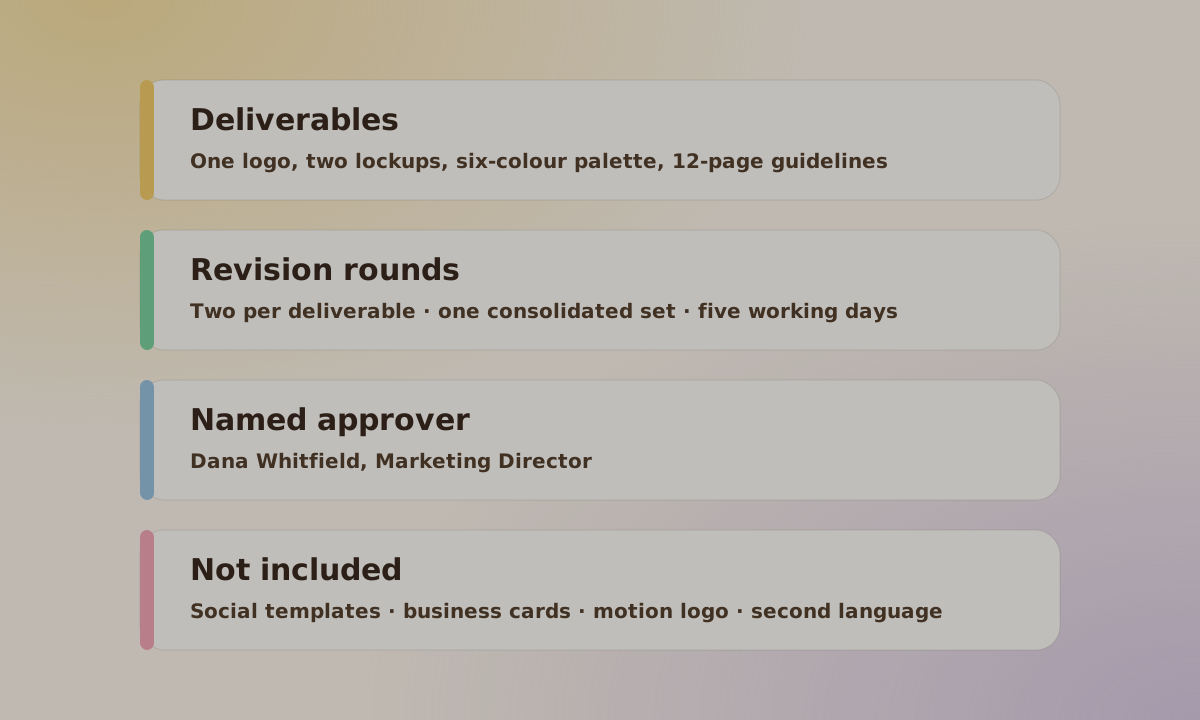
“Brand identity design” is an activity. “One primary logo, two secondary lockups, a six-color palette with usage notes, and a twelve-page guidelines PDF” is a set of deliverables. The first can expand forever; the second has edges. When a client later asks for a motion version of the logo, nobody has to argue about whether that was implied, because the list of things being delivered is right there. A scope of work template is a quick way to turn a loose brief into that list.
This feels fussy when you are writing it. It feels like a gift four weeks later.
Count the rounds
Revisions are where most budgets quietly die. A good proposal states the number of revision rounds for each deliverable and defines what a round is: one consolidated set of feedback, from one named person, within five working days of the presentation. A fourth round is available and it has a price. Clients rarely mind this, and the ones who want a fourth round pay for it without friction, because they knew the rule from the beginning.
- Name every deliverable and its format.
- State the number of revision rounds per deliverable.
- Name the one person on the client side whose feedback counts.
- List what is explicitly out of scope, including the things they are likely to ask for.
- Give the change-request price up front, before anyone needs it.
Write the “not included” section like you mean it
Most proposals have an exclusions line that says something like “anything not listed above”. That protects nobody, because it requires the client to have read and remembered the entire list. Instead, write out the five things this particular client is most likely to want next: the social templates, the business cards, the second language, the animated version. If you have done this kind of work before, you already know what they are.
A proposal that lists what it does not include is the only document in the project that tells the client the truth before they need it.
Price the change before it happens
The last piece is a line that says how a new request will be handled: a short written estimate, approval by the named contact, and the work scheduled after the current milestone. When a client asks for something extra, the answer becomes “yes, here is what that looks like” instead of a negotiation. The relationship stays warm because the proposal did the uncomfortable part weeks ago. It is also the one place an hourly rate belongs in a fixed-price proposal.
Change requests
---------------
Anything outside the deliverables above is welcome.
We'll send a short written estimate within two working days,
schedule it after the current milestone once Dana approves it,
and invoice it with that milestone.
Hourly rate for change requests: 110/h, estimated in advance.None of this makes a proposal longer than it needs to be: three pages is usually plenty. It does make it slower to write, by about an hour. That hour is the cheapest insurance a small studio can buy, and if you are starting from a blank page, the freelance proposal template gives you the goal, scope, timeline and price sections to build on.
Was this useful?
Meadow Desk
Notes from the desk
Meadow Desk is a calm workspace for freelancers and small studios: clients, proposals, tracked time and invoices in one place. We write here about the parts of studio work the desk touches: proposals and pricing, scope, tracked time, invoices and the clients behind them.
More notes from the desk
Pricing a project when the client asks “what’s your hourly?”
The hourly-rate question is a trap for both sides. Here is how to answer it honestly while steering the conversation back to what the project is worth.
The best free tools for freelancers in 2026
A practical list of free tools for freelancers: pricing, proposals, contracts, invoicing, time tracking, scheduling and taxes, with what each free plan covers.
The quiet invoice: getting paid on time without chasing anyone
Late payments are rarely about the client being difficult. They are about the invoice arriving at the wrong moment, in the wrong shape, with nothing attached to it that explains why it exists. Here is a sequence that fixes it.